
No products in cart
Hidden High Blood Pressure? How 24-Hour Monitoring Can Detect It
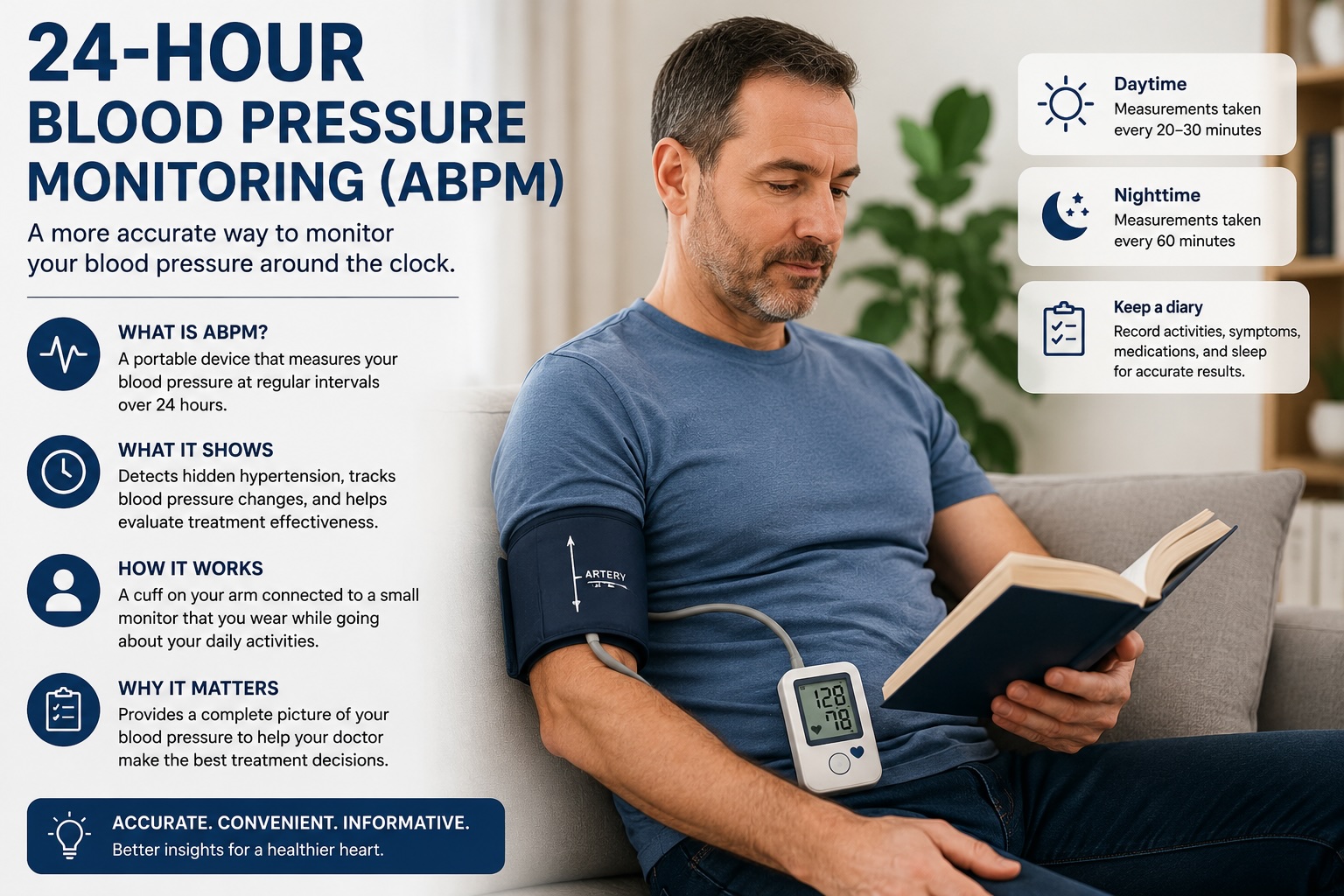
Ambulatory Blood Pressure Monitoring (ABPM) is a diagnostic test used to evaluate how blood pressure changes throughout the day and night. Unlike a single blood pressure reading taken in a clinic, ABPM records measurements automatically over a 24-hour period, providing a more accurate picture of cardiovascular health.
Because blood pressure naturally fluctuates depending on activity level, sleep, stress, and time of day, a one-time reading may not always reflect a person’s true blood pressure pattern. ABPM helps detect hidden abnormalities and allows physicians to identify problems at an early stage.
What Does ABPM Measure?
ABPM continuously tracks blood pressure at regular intervals over a full day. This provides valuable information about blood pressure behavior under normal daily conditions and helps eliminate factors that can influence readings during a clinic visit.
The test can help identify:
- Hidden (masked) hypertension and hypotension
- Relationships between blood pressure and stress, anxiety, physical activity, sleep, and body position
- The risk of cardiovascular disease
- Safe levels of physical activity
- The effectiveness of blood pressure treatment over time
Who Should Have ABPM?
A physician, typically a primary care doctor or cardiologist, may recommend ABPM to investigate symptoms, confirm a diagnosis, or evaluate treatment effectiveness. Common reasons for the test include:
- Frequent blood pressure fluctuations
- Repeated episodes of elevated blood pressure
- Suspected sleep apnea
- Evaluation for preeclampsia during pregnancy
- Fainting spells or loss of consciousness
- Persistent headaches that do not respond to pain medication
- Ringing in the ears (tinnitus)
- Black spots or visual disturbances
- Adjustment of existing blood pressure medications
- Occupational health assessments for professions such as pilots or train operators
ABPM may also be recommended for individuals with a strong family history of severe hypertension or cardiovascular disease.
Are There Any Contraindications?
Although ABPM is considered safe and noninvasive, it may not be suitable in certain situations. The test is generally avoided in people with:
- Skin injuries or irritation where the cuff is placed
- Active blood-clotting disorders
- Acute vascular conditions
- Severe forms of uncontrolled hypertension
- Significant arm injuries or trauma
Preparing for the Test
One advantage of ABPM is that it requires very little preparation. Patients are encouraged to follow their normal daily routine so that the results accurately reflect real-life conditions. Before the test:
- Get a good night’s sleep.
- Inform your doctor about any medications you regularly take.
- Wear loose, comfortable clothing.
- Avoid alcohol and caffeine for 24 hours before monitoring.
- Refrain from unusually intense exercise the day before the test.
What Happens During ABPM?
A blood pressure cuff is placed on the upper arm and connected to a portable monitor worn around the waist or over the shoulder. Before sending the patient home, the technician compares the device’s readings with a standard blood pressure monitor to ensure accuracy.
The monitor automatically measures blood pressure throughout the day, usually every 20–30 minutes during waking hours and every 60 minutes during sleep. Many devices also record heart rate. Patients should continue their usual activities but avoid excessive exertion or prolonged inactivity.
Tips During Monitoring
For the most accurate results:
- Relax your arm when the device begins a measurement.
- Maintain your usual daily routine.
- Keep a diary recording:
- Wake-up and bedtime
- Meals
- Physical activity
- Medication use
- Stressful events
- Symptoms experienced during the day
Avoid:
- Adjusting or moving the cuff unnecessarily
- Showering, bathing, or swimming
- Exposure to strong electromagnetic fields
- Sleeping in positions that may disconnect the monitor
During colder weather, the device should be worn under clothing to protect it from low temperatures.
Understanding the Results
After 24 hours, the monitor is removed and the collected data are transferred to a computer for analysis. Results are usually available within a day. The report typically includes:
- Average systolic and diastolic blood pressure
- Minimum and maximum blood pressure values
- Heart rate throughout the day and night
- Day-to-night blood pressure changes
- Morning blood pressure surge patterns
- Pulse pressure measurements
Normal ABPM Values
For most adults, average values are generally considered normal within the following ranges:
| Measurement | Normal Range |
|---|---|
| Daytime systolic BP | 100–135 mmHg |
| Nighttime systolic BP | 90–120 mmHg |
| Daytime diastolic BP | 65–85 mmHg |
| Nighttime diastolic BP | 50–70 mmHg |
These values may vary slightly depending on age, overall health, and individual factors.
Why ABPM Is Important
ABPM is one of the most reliable methods for evaluating blood pressure because it captures readings during everyday activities rather than in a clinical setting alone. This helps doctors identify hidden hypertension, assess treatment effectiveness, and better understand an individual’s cardiovascular risk.
Since blood pressure can vary significantly throughout the day due to stress, activity, and sleep, do you think a single office blood pressure reading is enough to assess cardiovascular health, or should 24-hour monitoring be used more often?



Angela
Editor Angela is passionate about nature, holistic care, and a natural healthy lifestyle. She has experience creating natural lifestyle recipes and exploring simple ways to support wellness through everyday habits. In addition, Angela is a nature photographer and the exclusive photographer for Nature Power Boost, capturing the beauty, calm, and healing power of the natural world through her images.Related Posts

Excess Weight and High Blood Pressure: A Dangerous Connection You Shouldn’t Ignore
June 24, 2026
Excess weight is more than just an aesthetic concern—it has a direct impact on the health of the heart and blood vessels. Cardiologists have long recognized that the higher a...
Type 2 Diabetes: Understanding the Risks, Symptoms, and Prevention Strategies
June 24, 2026
Type 2 diabetes is the most common form of diabetes, particularly among adults. Unlike type 1 diabetes, it develops gradually and is characterized by a combination of impaired insulin secretion,...

Heart Ultrasound (Echocardiogram): What It Shows, How to Prepare, and What the Results Mean
June 24, 2026
An echocardiogram, or heart ultrasound, is a safe, noninvasive imaging test that allows doctors to evaluate the structure and function of the heart and major blood vessels. The procedure uses sound...
Leave a Comment