
No products in cart

Poisonous Plants for Dogs: Symptoms and Safety Tips
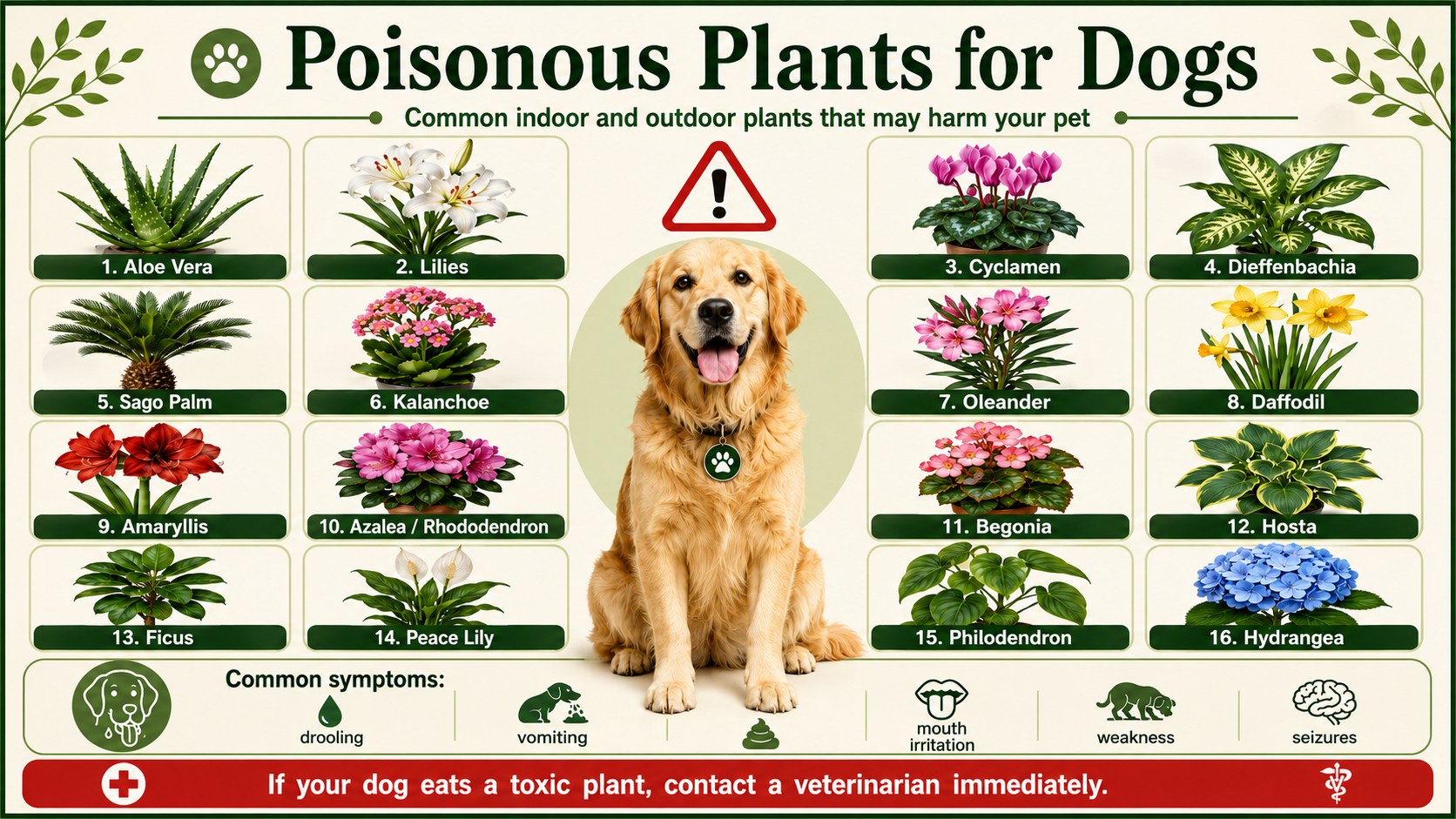
Many poisonous plants for dogs look completely harmless. A decorative houseplant, a bouquet of flowers, or a garden shrub can cause anything from mild mouth irritation to liver failure, heart problems, seizures, or death. Before bringing a new plant into your home or garden, check whether it is safe for pets. Dog owners should also learn the warning signs of plant poisoning and know what to do during an emergency.
Why Are Some Plants Poisonous to Dogs?
Toxic plants contain natural chemicals that protect them from insects and animals. These substances may irritate a dog’s mouth, damage the digestive system, affect the heart, or harm organs such as the liver and kidneys.
A plant usually becomes dangerous when a dog:
- Chews its leaves or stems
- Eats flowers, seeds, roots, or bulbs
- Licks sap from a damaged plant
- Drinks water from a flower vase
- Digs up and eats garden bulbs
Puppies and curious dogs face a higher risk because they often explore objects with their mouths.
Common Symptoms of Plant Poisoning in Dogs
The symptoms depend on the plant, the amount consumed, and the dog’s size and health. Contact a veterinarian immediately if your dog develops any of the following signs after chewing or eating a plant:
- Excessive drooling
- Mouth irritation or swelling
- Vomiting
- Diarrhea
- Loss of appetite
- Abdominal pain
- Weakness or unusual tiredness
- Difficulty swallowing
- Rapid or difficult breathing
- Tremors or seizures
- Poor coordination
- Abnormal heart rhythm
- Yellowing of the skin or eyes
- Collapse
Some poisonous plants for dogs cause symptoms quickly, while others may damage internal organs before obvious warning signs appear.
Aloe Vera
Aloe vera is a popular succulent that many people use for skin care and home remedies. Although the gel may appear harmless, the plant contains saponins and anthraquinones that can upset a dog’s digestive system.
Dogs usually experience poisoning after chewing or swallowing the leaf pulp or sap.
Toxins: Saponins and anthraquinones
Severity: Mild to moderate
Dangerous parts: Leaf pulp and sap
Symptoms: Vomiting, diarrhea, lethargy, loss of appetite, depression, and changes in urine color
Lilies and Lily-Like Plants
Many plants commonly called lilies can harm dogs, although the severity and type of poisoning vary by species. Some contain irritating calcium oxalate crystals, while others contain powerful alkaloids.
Autumn crocus and gloriosa lily can cause especially severe poisoning. Tulips and related bulb plants can also cause digestive irritation, particularly when a dog eats the bulbs.
Possible toxins: Calcium oxalates, colchicine-related alkaloids, and other toxic compounds
Severity: Mild to life-threatening, depending on the species
Dangerous parts: All parts, especially bulbs, seeds, or tubers in some species
Symptoms: Drooling, vomiting, diarrhea, abdominal pain, weakness, organ damage, shock, or collapse
Because plant names can be confusing, identify the exact species before deciding whether it is safe.
Cyclamen
Cyclamen produces colorful flowers and remains a popular indoor plant. However, it contains irritating saponins, especially in its roots and tubers.
A dog that chews cyclamen may develop digestive symptoms. Eating a large amount can also affect the heart and nervous system.
Toxins: Saponins
Severity: Mild to severe
Dangerous parts: All parts, especially the tubers
Symptoms: Drooling, vomiting, diarrhea, weakness, abnormal heart rhythm, and seizures
Allergies in Dogs: Signs, Causes, Treatment, and Care
Dieffenbachia
Dieffenbachia, also called dumb cane, contains insoluble calcium oxalate crystals. When a dog bites the plant, the crystals penetrate and irritate the tissues inside the mouth.
The reaction usually begins quickly and may make swallowing painful.
Toxins: Insoluble calcium oxalates and proteolytic enzymes
Severity: Mild to moderate
Dangerous parts: The entire plant
Symptoms: Severe mouth irritation, burning of the tongue, excessive drooling, vomiting, swelling, and difficulty swallowing
Sago Palm
Sago palm ranks among the most dangerous poisonous plants for dogs. Every part contains cycasin, but the seeds often hold the highest concentration.
Even a small amount can damage the liver and cause life-threatening poisoning.
Toxin: Cycasin
Severity: Severe
Dangerous parts: The entire plant, especially the seeds
Symptoms: Vomiting, increased thirst, jaundice, bloody diarrhea, bruising, abnormal blood clotting, liver failure, seizures, collapse, and death
Keep sago palms completely out of homes and gardens where dogs can reach them.
Kalanchoe
Kalanchoe is a popular flowering succulent that contains bufadienolides. These naturally occurring toxins can irritate the digestive system and affect the heart.
Most dogs develop vomiting or diarrhea, but severe exposure may cause changes in heart rhythm.
Toxins: Bufadienolides
Severity: Mild to severe
Dangerous parts: All parts
Symptoms: Drooling, vomiting, diarrhea, weakness, and abnormal heart rhythm
Oleander
Oleander is highly toxic to dogs, people, and other animals. Every part of the plant contains cardiac glycosides that interfere with normal heart function.
Fresh or dried leaves remain dangerous, and even small exposures require urgent veterinary attention.
Toxins: Cardiac glycosides
Severity: Severe
Dangerous parts: The entire plant
Symptoms: Drooling, abdominal pain, vomiting, diarrhea, weakness, poor coordination, tremors, difficulty breathing, abnormal heart rhythm, collapse, and death
Daffodils
Daffodils contain lycorine and other alkaloids. The bulbs contain the highest concentration of toxins, which makes planting season particularly risky for curious dogs.
A dog may dig up newly planted bulbs or chew bulbs left in an open bag.
Toxins: Lycorine and other alkaloids
Severity: Mild to severe
Dangerous parts: Primarily the bulb
Symptoms: Drooling, vomiting, diarrhea, abdominal pain, low blood pressure, tremors, seizures, and abnormal heart rhythm
Rhododendrons and Azaleas
Rhododendrons and azaleas contain grayanotoxins, sometimes called andromedotoxins. These compounds disrupt normal nerve, muscle, and heart function.
A dog may develop severe poisoning after eating only a small amount.
Toxins: Grayanotoxins
Severity: Severe
Dangerous parts: Leaves, flowers, stems, and other plant parts
Symptoms: Drooling, vomiting, diarrhea, weakness, low blood pressure, difficulty breathing, abnormal heart rhythm, collapse, and heart failure
Amaryllis
Amaryllis produces large, colorful flowers and often appears indoors during the holiday season. The plant contains lycorine and related compounds that irritate the digestive system.
The bulb presents the greatest danger.
Toxins: Lycorine and related alkaloids
Severity: Mild to moderate
Dangerous parts: All parts, especially the bulb
Symptoms: Drooling, vomiting, diarrhea, abdominal pain, loss of appetite, weakness, tremors, and low blood pressure
Begonia
Begonias contain insoluble oxalates that irritate the mouth and digestive tract. The roots and underground portions often contain the highest concentration.
Most cases cause painful but relatively mild symptoms.
Toxins: Insoluble oxalates
Severity: Mild
Dangerous parts: All parts, especially the roots
Symptoms: Mouth irritation, burning of the tongue, drooling, vomiting, and difficulty swallowing
Collagen for Dogs and Cats
Hosta
Hostas grow in many shaded gardens and contain saponins that can irritate a dog’s digestive system.
Dogs may become sick after chewing the leaves, flowers, or roots.
Toxins: Saponins
Severity: Mild to moderate
Dangerous parts: The entire plant
Symptoms: Vomiting, diarrhea, abdominal pain, bloating, and loss of appetite
Ficus
Some ficus species, including the weeping fig and rubber plant, contain irritating sap. Dogs may develop symptoms after chewing the leaves or coming into contact with the sap.
Toxins: Ficin, ficusin, and irritating plant sap
Severity: Mild
Dangerous parts: Leaves, stems, and sap
Symptoms: Mouth irritation, drooling, vomiting, diarrhea, and skin irritation
Peace Lily
Peace lilies contain insoluble calcium oxalate crystals. Unlike true lilies, they do not usually cause the same type of kidney damage, but they can still cause intense mouth irritation.
Toxins: Insoluble calcium oxalates
Severity: Mild to moderate
Dangerous parts: The entire plant
Symptoms: Burning and swelling of the mouth, drooling, pawing at the face, vomiting, and difficulty swallowing
Philodendron
Philodendrons are easy to grow, but they can cause painful symptoms when dogs bite their leaves or stems. Damaged plant tissue releases sap containing calcium oxalate crystals.
Toxins: Insoluble calcium oxalates
Severity: Mild to moderate
Dangerous parts: All parts
Symptoms: Mouth and tongue irritation, swelling, drooling, vomiting, and difficulty swallowing
Monstera
Monstera plants have become extremely popular in modern homes. Like philodendrons and peace lilies, they contain insoluble calcium oxalate crystals.
Chewing the leaves may cause immediate oral pain and swelling.
Toxins: Insoluble calcium oxalates
Severity: Mild to moderate
Dangerous parts: All parts
Symptoms: Burning in the mouth, drooling, swelling, vomiting, and difficulty swallowing
Poinsettia
Poinsettias have a reputation for being extremely poisonous, but they usually cause mild irritation rather than life-threatening poisoning. Their milky sap can irritate the mouth, stomach, skin, and eyes.
Toxins: Irritating diterpenoid esters and sap
Severity: Usually mild
Dangerous parts: Leaves, stems, and sap
Symptoms: Drooling, licking the lips, vomiting, diarrhea, skin irritation, and eye irritation
Hydrangea
Hydrangeas contain compounds that can release cyanide when damaged or digested. Most dogs would need to eat a significant amount to develop severe poisoning, but any suspected exposure deserves attention.
Toxins: Cyanogenic glycosides
Severity: Mild to moderate, potentially serious
Dangerous parts: Leaves, flowers, buds, and stems
Symptoms: Vomiting, diarrhea, weakness, abdominal pain, and lethargy
Nightshade Plants
The nightshade family includes ornamental peppers, brugmansia, brunfelsia, solandra, and several other decorative plants. Many contain alkaloids that affect the digestive and nervous systems.
Toxins: Various alkaloids
Severity: Moderate to severe
Dangerous parts: Vary by species
Symptoms: Nausea, vomiting, diarrhea, drowsiness, confusion, dilated pupils, weakness, tremors, and paralysis
Other Cut Flowers That May Harm Dogs
Bouquets can also expose dogs to poisonous plants. Do not allow your dog to chew flowers or drink vase water.
Potentially harmful cut flowers include:
- Tulips
- Irises
- Peonies
- Lupines
- Calla lilies
- Chrysanthemums
- Lily of the valley
- Delphiniums
- Foxglove
- Hyacinths
- Snowdrops
- Baby’s breath
Vase water may contain plant toxins, bacteria, fertilizer, or flower preservatives. Place bouquets where pets cannot reach them.
What to Do If Your Dog Eats a Poisonous Plant
Act quickly whenever you suspect plant poisoning.
First, remove your dog from the area and prevent further exposure. Take any remaining plant material out of the dog’s mouth only when you can do so safely.
Next, contact your veterinarian or an animal poison-control service immediately. Do not wait for symptoms to appear, especially if the plant may be a sago palm, oleander, azalea, rhododendron, autumn crocus, or another highly toxic species.
Collect the following information for the veterinarian:
- The plant’s name, if known
- A clear photograph or sample of the plant
- The part your dog ate
- The approximate amount consumed
- The time of exposure
- Your dog’s weight
- Any symptoms you have noticed
Do not induce vomiting or give milk, oil, salt, activated charcoal, medication, or another home remedy unless a veterinary professional specifically tells you to do so. Some substances cause additional damage when the dog vomits, and incorrect treatment can delay essential care.
Skin and Coat Care for Dogs and Cats: Healthy Pet Routine
How to Protect Your Dog From Poisonous Plants
Prevention offers the best protection. Identify every plant in your home, garden, patio, and yard. Remove highly toxic plants or place safer plants in areas your dog cannot access.
You should also:
- Store bulbs and seeds in closed containers
- Supervise dogs while gardening
- Remove fallen leaves, flowers, and seeds
- Prevent dogs from drinking vase water
- Watch puppies closely around houseplants
- Teach commands such as “leave it” and “drop it”
- Keep gardening products and fertilizers securely stored
- Check plants before buying or accepting them as gifts
During walks, prevent your dog from chewing unknown flowers, berries, mushrooms, or leaves.
Choose Dog-Safe Plants Whenever Possible
You do not need to give up indoor plants or gardening when you have a dog. However, you should choose pet-friendly varieties and place all plants thoughtfully.
Research each plant by its scientific name because common names can refer to several different species. When you cannot confirm whether a plant is safe, keep it away from your dog until you receive reliable information.
Learning about poisonous plants for dogs can help you prevent a frightening emergency. Careful plant selection, proper training, and quick veterinary care can protect your dog from serious illness and potentially save its life.

Lia
Founder & Editor Lia is a biologist with many years of research experience and a deep love for natural medicine. She is passionate about natural remedies, healthy living, and simple ways to support the body through nature. Eager to share her knowledge, Lia enjoys offering helpful lifestyle tips, wellness tricks, natural recipes passed down through generations, and inspiring ideas for living a healthier and more balanced life.Related Posts
Poisonous Plants for Dogs: Dangers and Symptoms
July 10, 2026
Discover common poisonous plants for dogs, the symptoms they may cause, and the steps to take if your pet chews or eats a toxic plant....

Skin and Coat Care for Dogs and Cats: Healthy Pet Routine
July 7, 2026
Skin and coat care for dogs and cats is more than grooming. It supports comfort, protects the skin barrier, and helps owners notice early signs of irritation, dryness, shedding, or...

Collagen for Dogs and Cats
July 6, 2026
Collagen for dogs and cats can support joints, bones, tendons, ligaments, skin, and coat health. Learn what collagen is, why pets may need it, where it comes from, and how...
Leave a Comment