
No products in cart
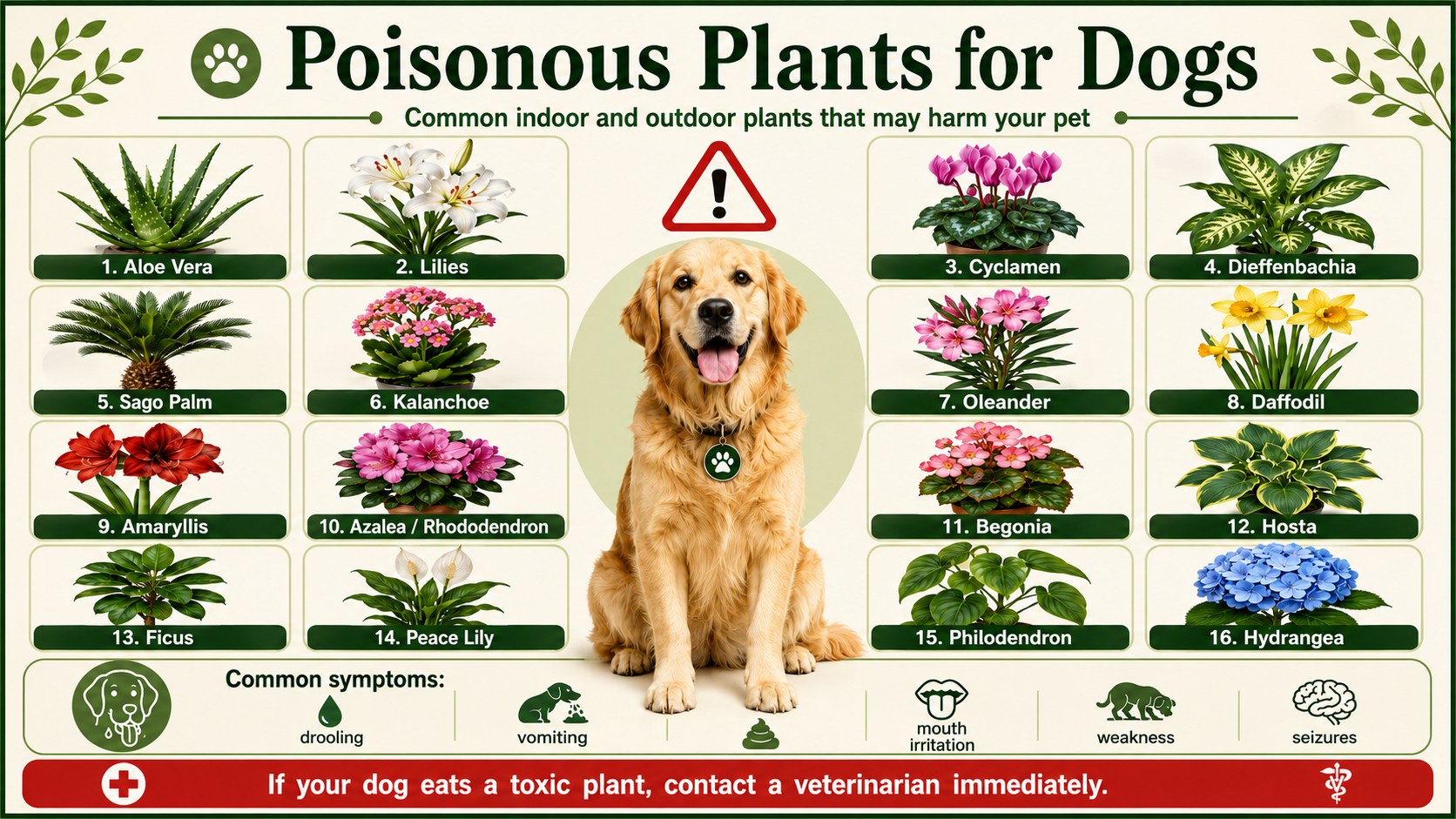
Many common indoor and outdoor plants can be poisonous to dogs. While some cause mild digestive problems, others may lead to seizures, liver failure, heart problems, or even death. Therefore, dog owners should identify the plants in their homes and gardens and keep toxic varieties out of reach.
Common Poisonous Plants for Dogs
Aloe Vera
Aloe contains saponins and anthraquinones that may cause vomiting, diarrhea, tiredness, and loss of appetite. As a result, even small exposures can lead to noticeable discomfort.
Lilies and Bulb Plants
Similarly, some lilies, tulips, and related plants contain dangerous toxins. In particular, bulbs, seeds, and tubers often contain the highest concentrations. Consequently, possible symptoms include drooling, vomiting, diarrhea, weakness, and organ damage.
Cyclamen
Cyclamen can cause drooling, vomiting, diarrhea, weakness, abnormal heart rhythms, and seizures. Notably, the roots and tubers are especially dangerous.
Dieffenbachia
Dieffenbachia contains calcium oxalate crystals that irritate the mouth and throat. As a result, symptoms include burning, swelling, drooling, vomiting, and difficulty swallowing.
Sago Palm
Sago palm is one of the most dangerous poisonous plants for dogs. In fact, all parts are toxic, especially the seeds. Therefore, it can cause vomiting, jaundice, liver failure, seizures, and death.
Kalanchoe
Kalanchoe may cause vomiting and diarrhea. In more severe cases, it can also affect the dog’s heart rhythm.
Oleander
Every part of oleander contains cardiac glycosides that can interfere with heart function. Consequently, symptoms include drooling, diarrhea, tremors, breathing problems, abnormal heart rhythms, collapse, and death.
Daffodils and Amaryllis
These plants contain lycorine and other alkaloids. In particular, their bulbs pose the greatest danger. As a result, they may cause vomiting, diarrhea, abdominal pain, tremors, and seizures.
Rhododendrons and Azaleas
These plants contain grayanotoxins that affect the nervous system and heart. Even a small amount, therefore, may cause vomiting, weakness, difficulty breathing, abnormal heart rhythms, or collapse.
Begonia, Peace Lily, and Philodendron
These plants contain insoluble calcium oxalates that irritate the mouth and digestive tract. Consequently, common symptoms include mouth pain, drooling, vomiting, swelling, and difficulty swallowing.
Hosta
Hostas contain saponins that may cause vomiting, diarrhea, bloating, abdominal pain, and loss of appetite. Thus, ingestion can quickly lead to gastrointestinal distress.
Ficus
Some ficus plants release irritating sap that can cause mouth irritation, vomiting, diarrhea, or skin reactions. Therefore, contact with the plant should be avoided.
Hydrangea
Hydrangeas contain cyanogenic compounds that may cause vomiting, diarrhea, weakness, and abdominal pain. As a result, ingestion can be particularly concerning.
Poisonous Plants for Dogs: Symptoms and Safety Tips
Signs of Plant Poisoning in Dogs
If your dog shows any of these symptoms after chewing a plant, you should contact a veterinarian immediately:
- Excessive drooling
- Vomiting or diarrhea
- Mouth swelling or irritation
- Loss of appetite
- Weakness or tiredness
- Tremors or seizures
- Difficulty swallowing or breathing
- Abnormal heart rhythm
- Collapse
What to Do If Your Dog Eats a Toxic Plant
First, remove your dog from the area and prevent further exposure. Then, safely remove any plant material from its mouth.
Next, contact your veterinarian or an animal poison-control service immediately. Importantly, do not induce vomiting or give medication or home remedies unless a veterinary professional instructs you to do so. Additionally, take a photograph or sample of the plant and provide details about how much your dog may have eaten and when the exposure occurred.
How to Keep Your Dog Safe
To begin with, identify every plant in your home and garden. Then, remove highly toxic plants or place them where your dog cannot reach them.
Furthermore, keep bulbs, seeds, fertilizers, and gardening products securely stored. Also, prevent dogs from drinking vase water and teach commands such as “leave it” and “drop it.”
Ultimately, learning about poisonous plants for dogs can help you prevent a serious emergency and protect your pet’s health.


Lia
Founder & Editor Lia is a biologist with many years of research experience and a deep love for natural medicine. She is passionate about natural remedies, healthy living, and simple ways to support the body through nature. Eager to share her knowledge, Lia enjoys offering helpful lifestyle tips, wellness tricks, natural recipes passed down through generations, and inspiring ideas for living a healthier and more balanced life.Related Posts

Poisonous Plants for Dogs: Symptoms and Safety Tips
July 10, 2026
Many common indoor and outdoor plants can harm dogs. Learn which poisonous plants to avoid, recognize warning signs, and respond quickly if your dog eats a toxic plant....

Skin and Coat Care for Dogs and Cats: Healthy Pet Routine
July 7, 2026
Skin and coat care for dogs and cats is more than grooming. It supports comfort, protects the skin barrier, and helps owners notice early signs of irritation, dryness, shedding, or...

Collagen for Dogs and Cats
July 6, 2026
Collagen for dogs and cats can support joints, bones, tendons, ligaments, skin, and coat health. Learn what collagen is, why pets may need it, where it comes from, and how...
Leave a Comment